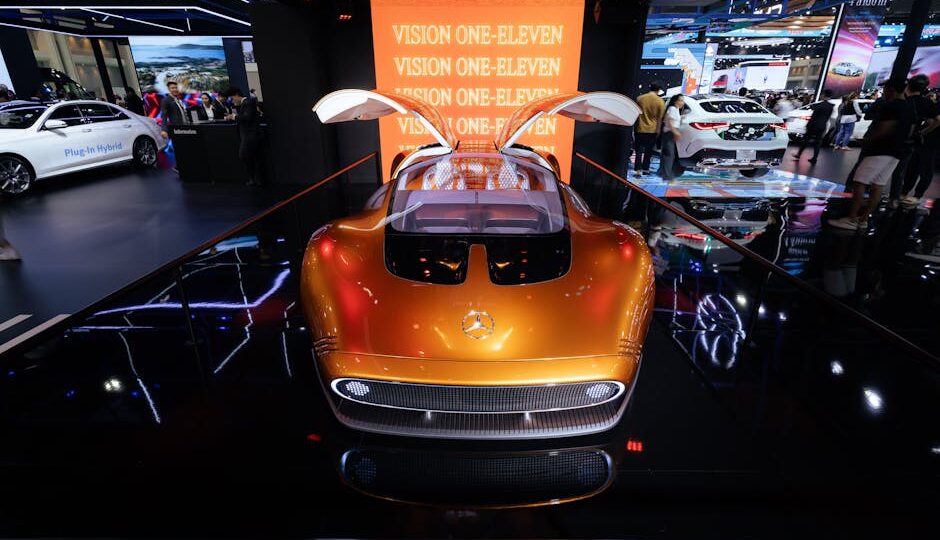
Why the 2026 Car Market Will Be More Competitive Than Ever
The automotive industry in 2026 is a battleground like never before. As consumers navigate through a sea of options, manufacturers are locked in a relentless race to innovate and capture market share. From technological advancements to evolving consumer preferences, several key factors are driving this fierce competition in today’s car market.
Technological Advancements Fueling the Race
In the past, cars were judged mainly by horsepower and design aesthetics. However, in 2026, technology is the name of the game. The rise of electric vehicles (EVs), autonomous driving capabilities, and smart connectivity features is setting new benchmarks for what consumers expect from their cars.
Take Tesla’s Model Z, for instance. Released in late 2025, it boasts a groundbreaking range of 450 miles on a single charge and an AI-driven autopilot system that is 30% more efficient than its predecessors. Not to be outdone, traditional automakers like BMW and Toyota have upped their game. BMW’s new iX7 offers augmented reality (AR) navigation, while Toyota’s latest Prius features a solar panel roof that can power the car for up to 30 miles a day.
Shifting Consumer Preferences
Consumers in 2026 are more informed and demanding than ever, pushing manufacturers to rethink their strategies. Sustainable, eco-friendly vehicles are no longer a niche market but a mainstream demand. According to a recent survey by J.D. Power, 68% of potential car buyers in the U.S. consider the environmental impact of their vehicles as a top priority.
This shift has prompted companies like Ford to expand their electric lineup considerably, with the Ford F-150 Lightning Pro becoming a bestseller in the electric pickup segment. Meanwhile, luxury brands like Mercedes-Benz have rolled out their EQ series, which seamlessly blends sustainability with opulence, appealing to environmentally conscious luxury seekers.
Increasing Global Competition
The car market in 2026 is not just a clash of titans from the U.S., Europe, and Japan. It’s a global showdown with new players entering the arena. Chinese manufacturers like NIO and BYD are making significant inroads into international markets, offering high-quality EVs at competitive prices.
NIO’s ET7, equipped with a solid-state battery technology that offers a remarkable 600-mile range, has gained a strong foothold in Europe. Similarly, India’s Tata Motors is not far behind, with its Nexon EV Max capturing the attention of eco-conscious buyers in Asia and beyond.
Innovative Business Models
With competition heating up, automotive companies are also experimenting with innovative business models to entice buyers. Subscription services, once limited to streaming platforms and software, have entered the automotive space. Companies like Volvo and Cadillac offer subscription programs that bundle insurance, maintenance, and roadside assistance into a single monthly fee.
This model caters to a growing audience that values flexibility and convenience over ownership. According to McKinsey, the car subscription market is expected to grow by 30% annually, suggesting a significant shift in how people choose to access mobility solutions.
Regulatory Changes and Economic Factors
Regulatory changes across the globe are also shaping the competitive landscape. With Europe’s new 2030 emissions targets looming, automakers are under pressure to accelerate their transition to greener technologies. The U.S. is also pushing for stricter fuel economy standards, compelling manufacturers to innovate or face hefty penalties.
On the economic front, while inflation rates have stabilized since the volatile years of the early 2020s, consumer spending is more cautious. This has led automakers to offer attractive financing options and incentives to lure would-be buyers.
What’s the Practical Takeaway?
For consumers, the 2026 car market offers an unprecedented array of choices, from cutting-edge technology to flexible purchasing models. For automakers, staying ahead means not only embracing new technologies and business models but also understanding and adapting to the shifting dynamics of consumer preferences and regulatory environments.
Ultimately, the key to success in this hyper-competitive market lies in innovation, adaptability, and a keen awareness of global trends. So whether you’re a car enthusiast, a tech aficionado, or someone looking to make an environmentally conscious choice, the race to the top has never been more thrilling.