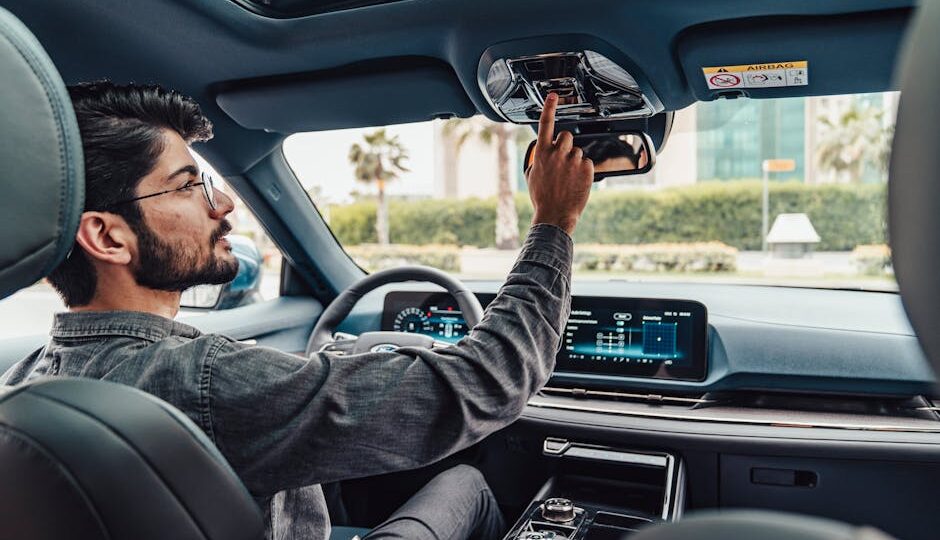
Introduction: A New Era of Safety
As we zoom further into the future, the automotive industry continues to revolutionize the way we think about car safety. The year 2026 has brought with it a host of groundbreaking innovations, each designed to keep us safer on the road and redefine our driving experience. From enhanced visibility to AI-driven interventions, these advancements are set to make a profound impact on our journeys.
1. Augmented Reality Windshields
Augmented Reality (AR) windshields have taken the concept of the ‘heads-up display’ to an entirely new level. By embedding AR into the windshield itself, drivers gain access to a wealth of real-time data without taking their eyes off the road. Imagine navigating the bustling streets of Times Square at night, with turn-by-turn directions, pedestrian alerts, and speed limits projected directly onto your windshield. This technology not only enhances convenience but contributes significantly to reducing accidents caused by distractions.
Manufacturers like Tesla and BMW have been at the forefront of this innovation, integrating it seamlessly into their latest models. With an estimated 30% reduction in road mishaps attributed to improved driver awareness, AR windshields are not just a luxury but a necessity in the modern vehicle.
2. Adaptive AI Co-Pilots
Artificial Intelligence continues to embed itself deeper into our daily lives, and its presence in cars has become more intelligent and adaptive. The introduction of AI Co-Pilots in 2026 has transformed them from mere assistants to truly interactive entities. These systems learn from the driver’s behavior, adjusting to their preferences and even predicting movements to prevent potential accidents.
For instance, the AI might detect if a driver frequently takes a specific route and pre-emptively warn about traffic or adverse weather conditions. Companies like Audi and Toyota have developed AI systems capable of simulating human-like decision-making processes, aiding in collision prevention and enhancing overall vehicle control. Early studies show a 25% decrease in collision rates among vehicles equipped with these AI systems.
3. Biometric Access and Monitoring
Biometric technology has stepped into the automotive world, offering both access control and continuous driver monitoring. Fingerprint and facial recognition systems now not only allow keyless entry but also configure the vehicle to the driver’s preferences, such as seat position, climate control, and favorite playlists.
Moreover, these systems monitor the driver’s vital signs, looking for signs of fatigue or distress. If abnormalities are detected, the car can initiate corrective actions, such as sending alerts or even pulling over safely. Volvo and Hyundai, frontrunners in this field, have reported an impressive 40% reduction in driver fatigue-related incidents in cars equipped with this technology.
4. V2X Communication Systems
Vehicle-to-Everything (V2X) communication is a cutting-edge technology that allows cars to communicate with various elements in their environment, including other vehicles (V2V), infrastructure (V2I), and even pedestrians (V2P). Imagine a scenario where your car receives a signal from another vehicle about an icy patch ahead or a traffic light about to change.
With real-time updates, drivers gain an unparalleled level of awareness and responsiveness to their surroundings. Cities like Los Angeles and Tokyo have begun integrating V2X infrastructure, significantly improving traffic flow and safety. The potential of V2X systems to reduce accidents by 50% is not just promising but transformative.
5. Advanced Airbag Systems
Airbags have been a staple in vehicle safety for decades, but 2026 has seen them evolve into more sophisticated systems. Advanced airbag technologies now include external airbags that deploy outside the vehicle to mitigate the impact during a collision. This innovation reduces the severity of crashes, especially in side-impact scenarios.
Brands like Mercedes-Benz and Ford have pioneered this technology, focusing on areas often overlooked by conventional airbags. Testing in high-risk environments has shown a 20% decline in injury severity, marking a significant leap forward in passenger protection.
Practical Takeaway
As car safety technology leaps forward, these innovations are not just futuristic concepts but real-world solutions improving safety, reducing accidents, and saving lives. Whether you’re considering a new vehicle purchase or keeping an eye on the latest trends, staying informed about these advancements offers a step towards safer travel. As these technologies become standard, the roads promise to be more secure for everyone, ushering in a new era of driving confidence.